Niagara
UE5 particle and VFX system
Definition
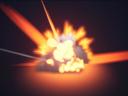
Niagara is Unreal Engine's real-time visual effects system, replacing the older Cascade module. It runs on a node graph with emitters and modules — particle behaviours like spawn rate, velocity, colour curves, collision, GPU computation. Niagara handles everything from simple sparks to full destruction simulations, fluid dynamics, and ribbon trails. Almost every modern UE5 game VFX shot is built in Niagara.
In production
Standard production order: design the silhouette of the effect first (timing, anticipation, payoff — a fireball's read arc before the explosion, for example), then build it from premade modules (Spawn Rate, Add Velocity, Color over Life, Collision), then optimize. Heavy effects run on the GPU; small UI effects stay on CPU, since Niagara's GPU emitters can simulate hundreds of thousands of particles for things like destruction debris, while CPU emitters are cheaper to read back for gameplay logic like damage triggers. Niagara replaced Cascade fully as of UE5, and most legacy Cascade effects need manual rebuilding rather than automatic conversion, a common migration cost studios budget for when upgrading old UE4 projects. A frequent beginner mistake is leaving collision enabled on every particle in a large system, which forces expensive per-particle raycasts each frame; profiling with the Niagara Debugger quickly reveals which emitters are the actual frame-time cost.